


What You’ll Find on This Page
A good camp kitchen setup saves more time than almost any stove upgrade. Once everything has a place, cooking outdoors feels smoother, even after a long drive or late arrival at camp. This page pulls together the camp kitchen organizers necessary for a functional camp kitchen that you can set up quickly and keep running without constant digging through bins.
You’ll find organized breakdowns of the main systems covered in this chapter. That includes soft-sided kitchen organizers, classic chuck boxes, modular storage trunks, compact kitchen kits, and full integrated kitchen setups. Each serves a different purpose depending on how you camp, how often you cook outside, and how much gear you carry.
The product sections group proven gear into those same categories. This makes it easier to compare options without jumping between different styles. Some setups are built for quick overnight stops, while others are better suited for extended trips where you’re cooking most meals outdoors.
Use this page as a quick-reference companion while reading the chapter. If you’re building your system from scratch, start with one category and expand gradually. If you already have gear, this page helps you tighten up weak spots—usually storage, access, or setup time.
Most of the frustration around camp cooking isn’t the cooking itself. It’s the setup and teardown. A well-organized kitchen fixes that fast.
GEAR TIP:
A well-packed kitchen organizer should let you find any tool in under five seconds. If you’re digging around longer than that, your setup needs better compartment separation or labeling.
Quick Gear Summary
- Camp kitchen organizers (soft-sided storage systems)
- Chuck boxes (rigid, compartment-style storage)
- Camp boxes / modular storage trunks
- Kitchen kits and galley kits (tools and utensils)
- Integrated kitchen systems (table + storage combos)
Product Recommendations by Category
The products below represent commonly recommended options within the categories discussed in this chapter.
Camp Kitchen Organizers
Lightweight and easy to deploy, these work well for weekend trips or quick outdoor cooking setups where space matters.
GSI Outdoors Destination Kitchen Set 24
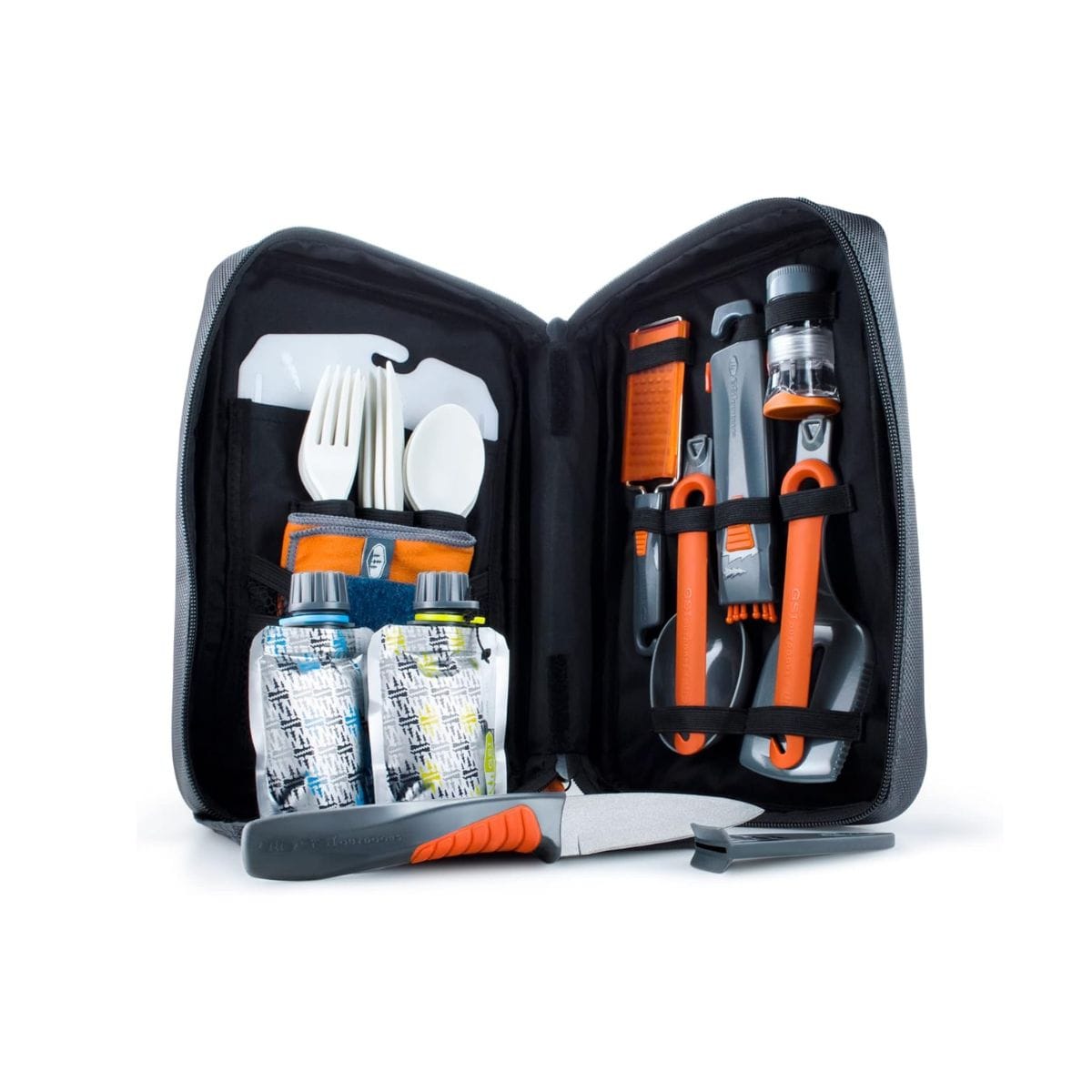
Durable copolyester/polyethylene utensils built to withstand camping, overlanding, or basecamp cooking.
Chuck Box
Rigid storage that keeps gear protected and easy to access during longer trips or group cooking setups.
Yeti LoadOut GoBox 60
(Configured as a Camp Kitchen Box)

This cargo box meets IP65 and IP67 international ratings for dustproofing and full submersion.
The Camp Box or Camp Kitchen Box
Modular storage options that allow you to divide gear into categories for easier packing and access.
Plano Sportsman Storage Trunk

Fits easily in the closet, attic, garage, or work shed.
Kitchen Kits and Galley Kits
Focused on tools rather than storage, these kits are perfect for portable or minimalist cooking setups.
Odoland Camping Cookware Mess Kit with Utensils

All pieces nest together, and everything is stacked and packed into a nylon mesh bag.
Integrated Kitchen Systems
These combine storage and prep space into one setup, ideal for campers who cook outdoors regularly.
Camp Chef Sherpa Table & Organizer

Extendable legs are perfect for raising the table to a perfect cooking height.
Disclosure: As an Amazon Associate, we may earn from qualifying purchases.
Gear Comparison Guidance
Choosing the right setup comes down to how often you cook and how much gear you carry. Lightweight organizers work well when you’re only cooking occasionally or staying one or two nights. They’re quick to deploy and easy to store, but don’t offer much protection for fragile gear.
Hard-sided boxes handle rough travel better. They keep everything contained and protected, especially on dusty or wet trips. The trade-off is weight and bulk. Moving them in and out of storage compartments can get tiring if they’re overloaded.
Modular systems sit in the middle. Splitting your kitchen into multiple smaller containers makes packing easier and reduces the need to unpack everything at once. This camp kitchen organizers setup works especially well for RV travel.
Integrated systems add convenience but take up more space. They’re best if you cook outside regularly and want a consistent setup every time.
Quick Decision Guide
- If you camp on weekends, a simple organizer and utensil kit is usually enough.
- If you cook most meals outdoors, consider a modular or integrated system.
- If you travel off-grid or on rough roads, use a hard-sided storage box.
- If space is limited, choose compact kits that pack down small.
- If multiple people cook together, prioritize systems with compartments and easy access.
Buying Considerations
- Total weight when fully packed
- Storage space available in your RV or vehicle
- Ease of setup and teardown
- Resistance to dust and moisture
- Internal organization and compartments
- Durability of materials and latches
- Compatibility with your existing cooking gear
Accessory Ideas
- Collapsible dish tubs – simplify cleanup and save space
- Label kits or tags – help identify compartments quickly
- Waterproof storage pouches – protect cleaning supplies and spices
- Stackable containers – keep dry goods organized and sealed
- Hanging utensil racks – improve access during cooking
- Compact cutting boards – add prep space without bulk
Camp Kitchen Organizers FAQs
What is the best way to organize a camp kitchen?
Divide the gear into categories such as utensils, cookware, cleaning supplies, and food storage. Use separate camp kitchen organizers, like containers or compartments, for each group. This speeds up setup and prevents digging through a single large bin every time you need something.
Do I need a chuck box for RV camping?
Not always. Chuck boxes are great for larger setups and group cooking, but many RV travelers prefer modular bins or soft organizers. The best choice depends on how often you cook outdoors and how much gear you carry.

Are camp kitchen organizers worth it?
Yes, especially if you cook outdoors regularly. They reduce setup time, keep tools accessible, and prevent gear from getting lost or damaged. Over time, they make campsite cooking far more efficient.
What should be included in a camp kitchen kit?
Basic kits should include utensils, a knife, a cutting board, cooking tools, dish soap, a sponge, and storage containers. Many campers also include spices, oil, and backup tools to avoid having to return to the RV or vehicle.
How do I keep camp kitchen gear clean during travel?
Store items in sealed containers and keep cleaning supplies in waterproof pouches. Hard-sided boxes help protect against dust and moisture, especially on longer trips or rough roads.
Other Resources
A few extra reads can help you tighten up camp kitchen workflow, storage, and meal prep. These articles pair well with camp kitchen organizers because they cover space-saving ideas, practical RV kitchen planning, and broader cooking setup decisions.
- 10 Essential Camper Organization Tips for a Smooth and Effortless Road Trip
- RV Kitchen Space Transformations: 13 of the Best Space Saving Ideas
- RV Kitchen Essentials for Making Delicious Meals on Wheels
- Outdoor Cooking Equipment for Beginners – Camping Guide
- Essential Additions to Any RV Kitchen Space – The Best Options
Keep Exploring Camp Kitchen Gear
If you’re building out a more complete cooking setup, these related gear pages are the logical next stop. They connect well with camp kitchen organizers because they cover the tools, storage, and cooking systems that usually live right beside them at camp.
- Storage and Organization Helpers
- Camp Cooking Utensils, Tools, & Kitchen Gadgets
- Coolers, Fridge Accessories, and Food Storage Gear
- Outdoor Cooking Equipment
- Camp Stoves & Camp Cookers
Closing Guidance
A well-organized camp kitchen changes how you experience cooking outdoors. Instead of piecing together your setup at every stop, you arrive ready. Open a box, set things out, and start cooking. That consistency makes a big difference over time.
The best camp kitchen organizers setup isn’t the biggest or most expensive. It’s the one that matches how you actually camp. If you’re moving often, keep it simple and lightweight. If you stay longer and cook more, build a system that supports that routine.
Small improvements add up. Separating utensils, protecting cleaning supplies, and keeping frequently used items within reach all save time. Over a full season of trips, that time adds up quickly.

If something feels frustrating at camp, it’s usually a sign your system needs adjusting. Remove what you don’t use. Add storage where things get messy. Refine it one trip at a time.
A good camp kitchen using camp kitchen organizers doesn’t just hold gear. It keeps your routine smooth, your meals easier, and your time at camp more enjoyable.
Date Updated: 03/26


