

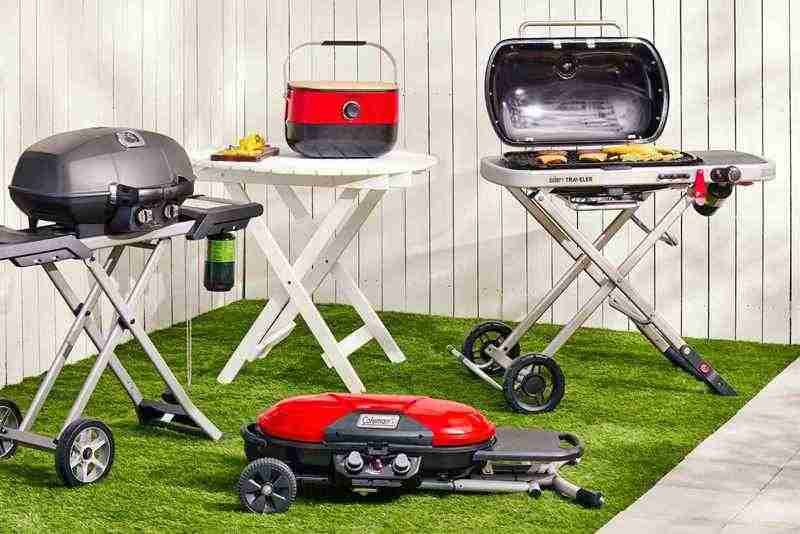

What You’ll Find on This Page
Portable camping grills do a lot of heavy lifting at camp. They keep heat and grease outside, free up the RV kitchen, and make it easier to cook the kind of meals people actually want after a travel day. This page supports Chapter 2, “Portable Grills & BBQs,” by consolidating gear in one place so readers can compare portable camping grill types, review product picks, and determine which style best fits their trips. The chapter explains the trade-offs in more depth. This page is the quick-reference version.
You’ll find the main portable camping grill categories covered in the chapter: portable gas grills, charcoal grills, tailgate-style grills, and pellet grills. Each one solves a different campsite problem. Some are best for fast weeknight-style cooking after a long drive. Some are better for campers who enjoy slower cooking and stronger smoke flavor. Others make more sense when you are feeding a family, staying put for several days, or working with shore power. Use this page beside the chapter, not instead of it.
The book gives a fuller explanation of why these portable camping grills work well, where they can become a hassle, and what mistakes tend to show up once you start packing, fueling, and cooking outdoors. This page helps you scan the recommended models, compare the broad categories, and jump to related articles that round out your camp cooking setup. It is the campsite version of laying your gear out on the picnic table before the trip and deciding what actually earns its spot.
EXPERT TIP:
A grill that cooks well but takes too much setup usually stays packed. For frequent camping, fast ignition, easy cleanup, and stable placement matter just as much as cooking performance.
Quick Gear Summary
- Portable gas grills for quick setup, easy heat control, and reliable everyday campsite cooking
- Charcoal grills for campers who care more about flavor and don’t mind a slower cooking rhythm
- Tailgate-style grills for families, group cooking, and larger meal prep at camp
- Pellet grills are ideal for longer stays, smoked cooking, and more precise temperature control when power is available.
Product Recommendations by Category
The products below represent commonly recommended options within the portable camping grills discussed in this chapter. Use these examples to compare features and find the gear that best fits your camping style. Discover the best portable grills of various types below.
Best Portable Gas Grills
These grills fit campers who want fast meals without turning dinner into a project. They work especially well for RV travel, overnight stops, and trips where simple fuel management and quick cleanup matter most.
Weber Q1200 Portable Gas Grill
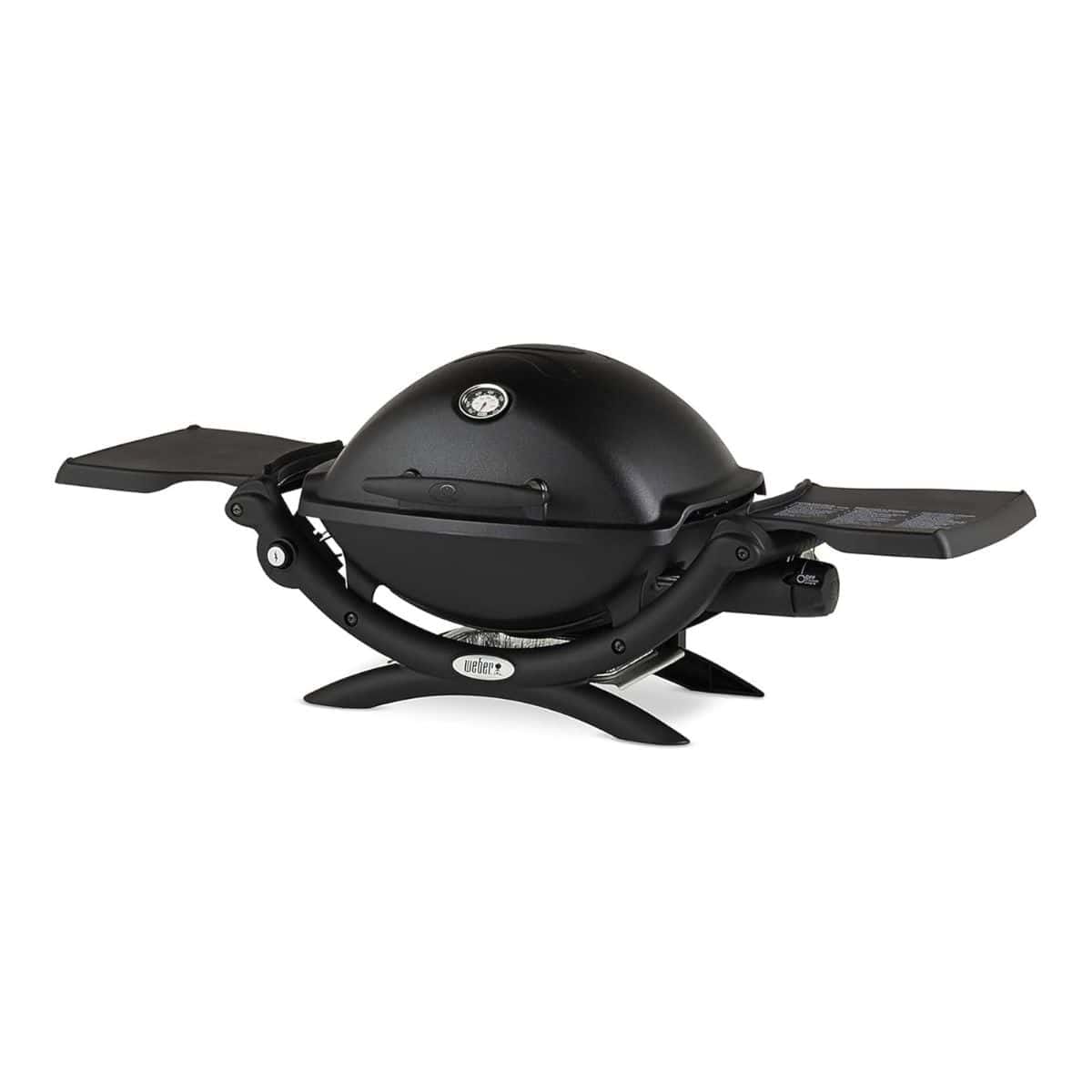
Suitable for high-heat searing and lower temperatures
Napoleon TravelQ 285
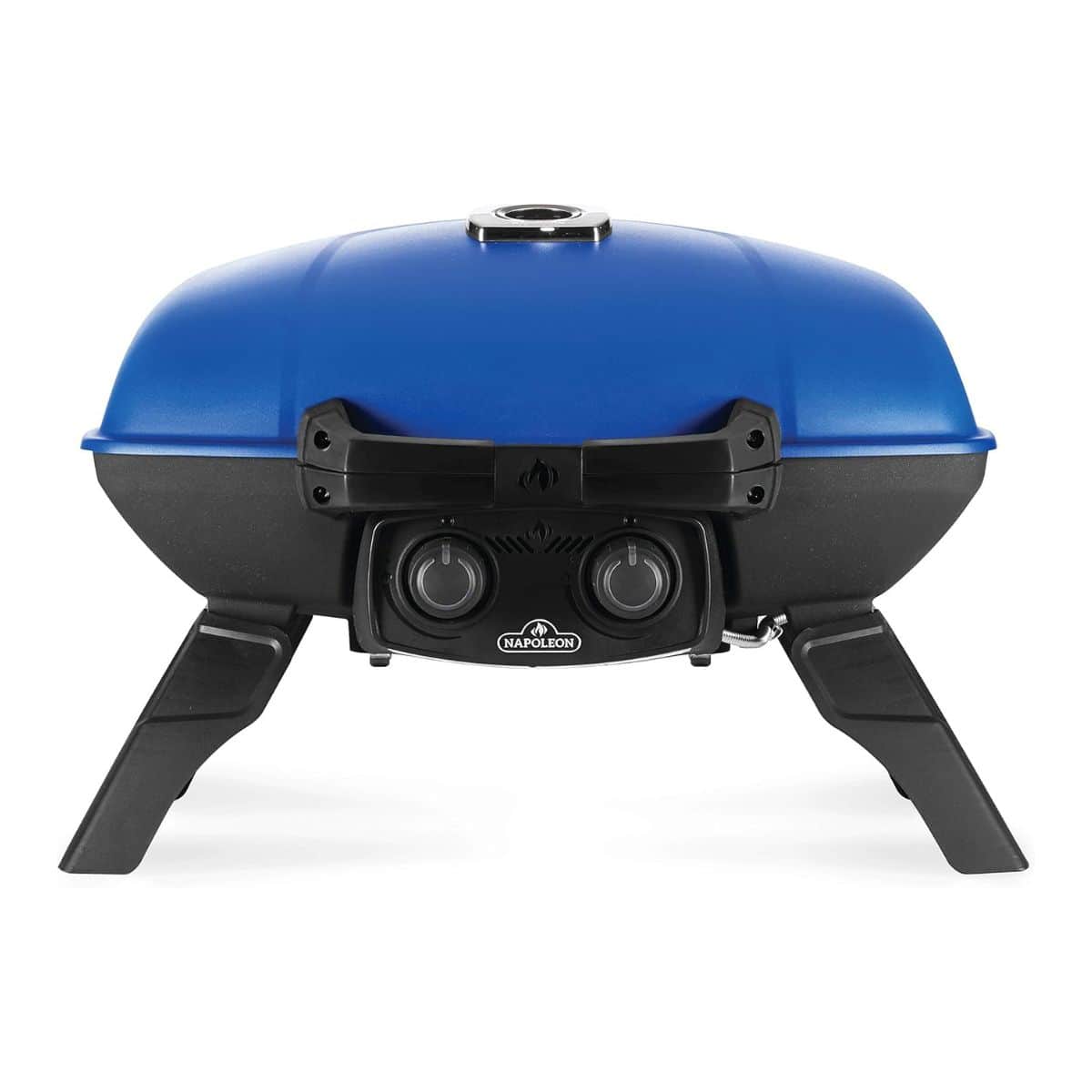
Features 2 individually controlled stainless steel tube burners
Best Charcoal Grills for Camping
These grills fit campers who like the slower pace of charcoal cooking and want a stronger grilled flavor. They are better suited to relaxed cooking sessions than rushed roadside dinners.
Lodge Cast Iron Sportsman’s Grill
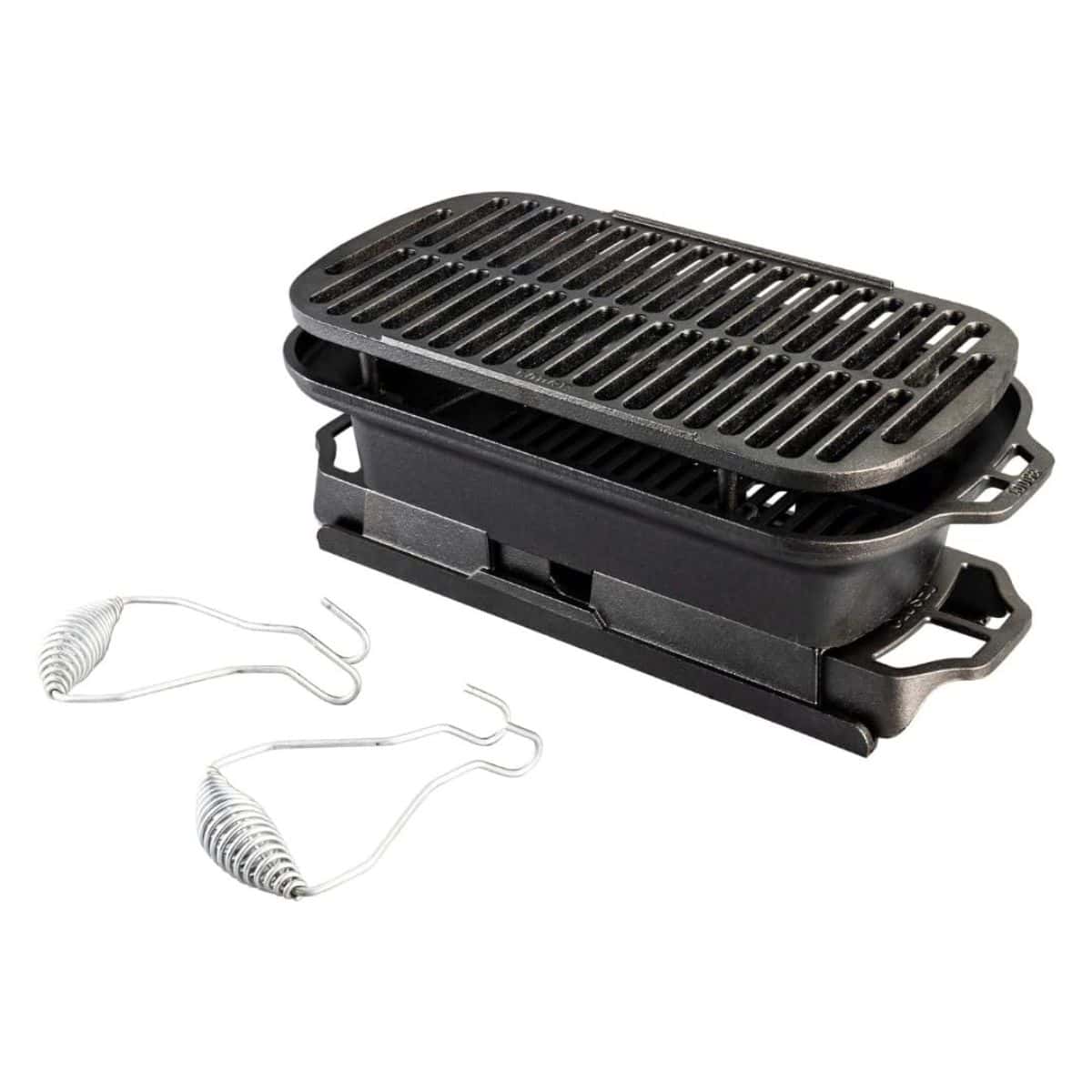
Dual air vents let you control the heat as you cook
Weber Smokey Joe Premium
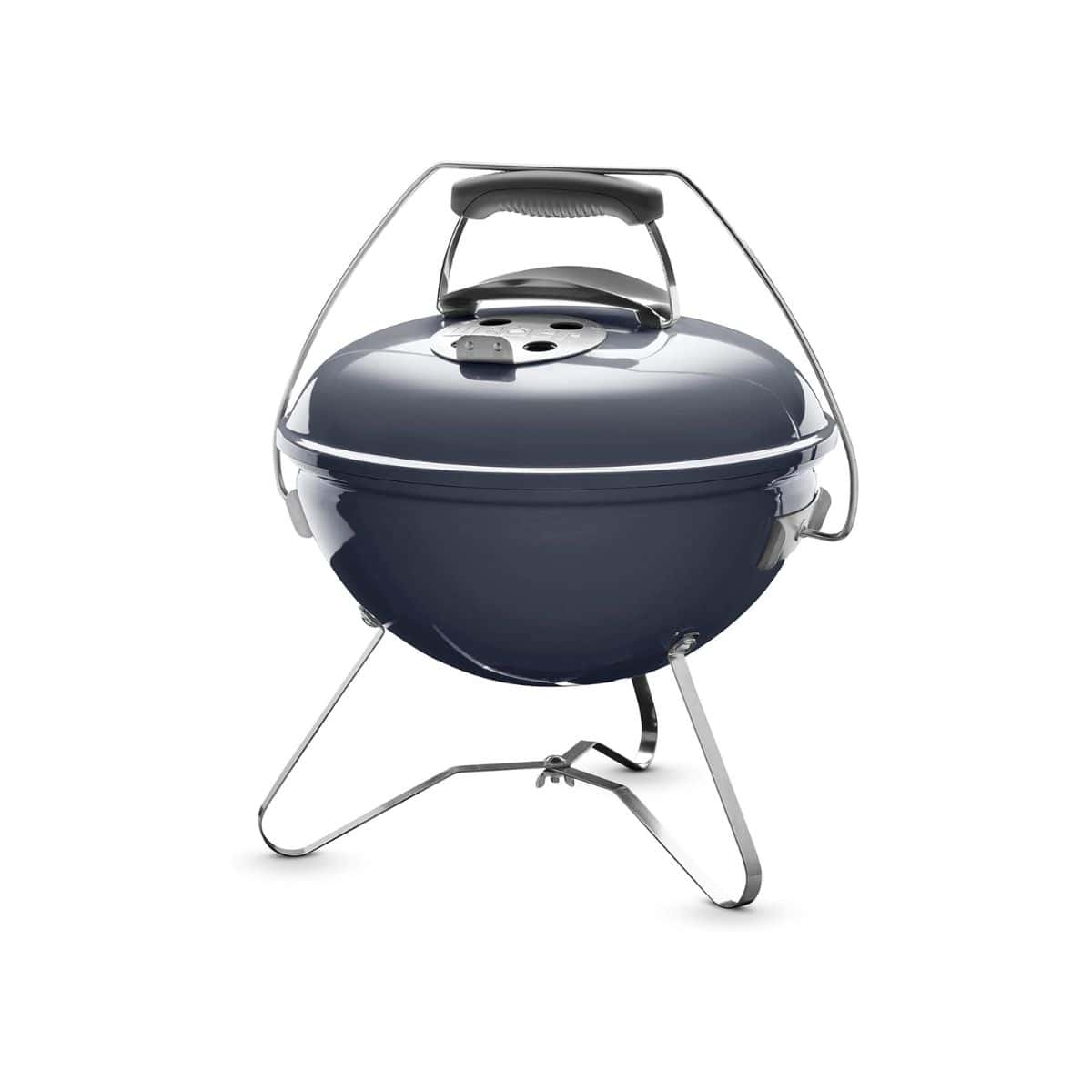
Porcelain Enamelled Lid and Bowl
Best Tailgate-Style Grills
These grills are built for campers who cook for more than one or two people and want a more comfortable cooking height. They take up more space in storage, but that trade often pays off during longer meal prep.
Coleman RoadTrip 285
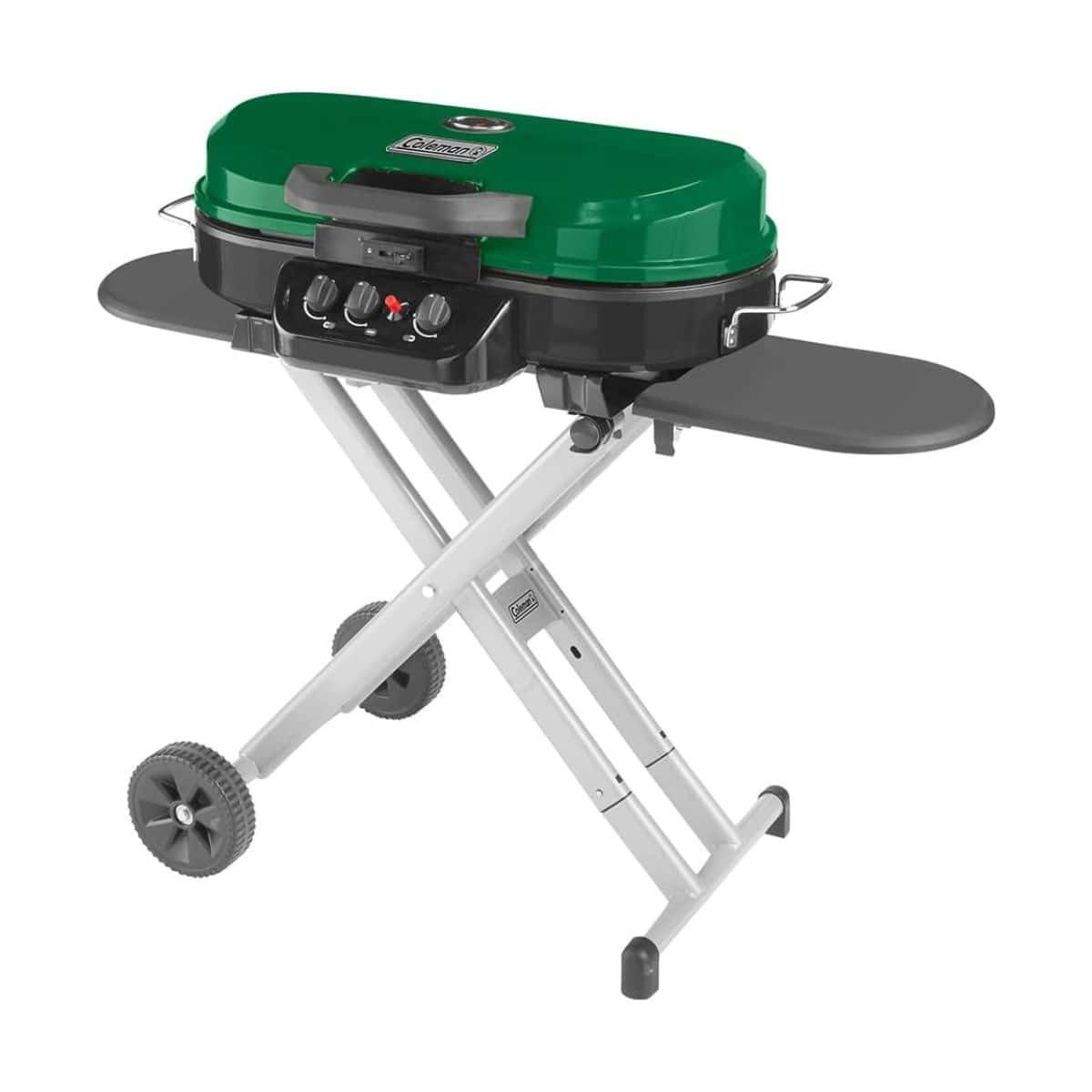
Integrated design for accurate temperature monitoring
Weber Traveler Portable Gas Grill
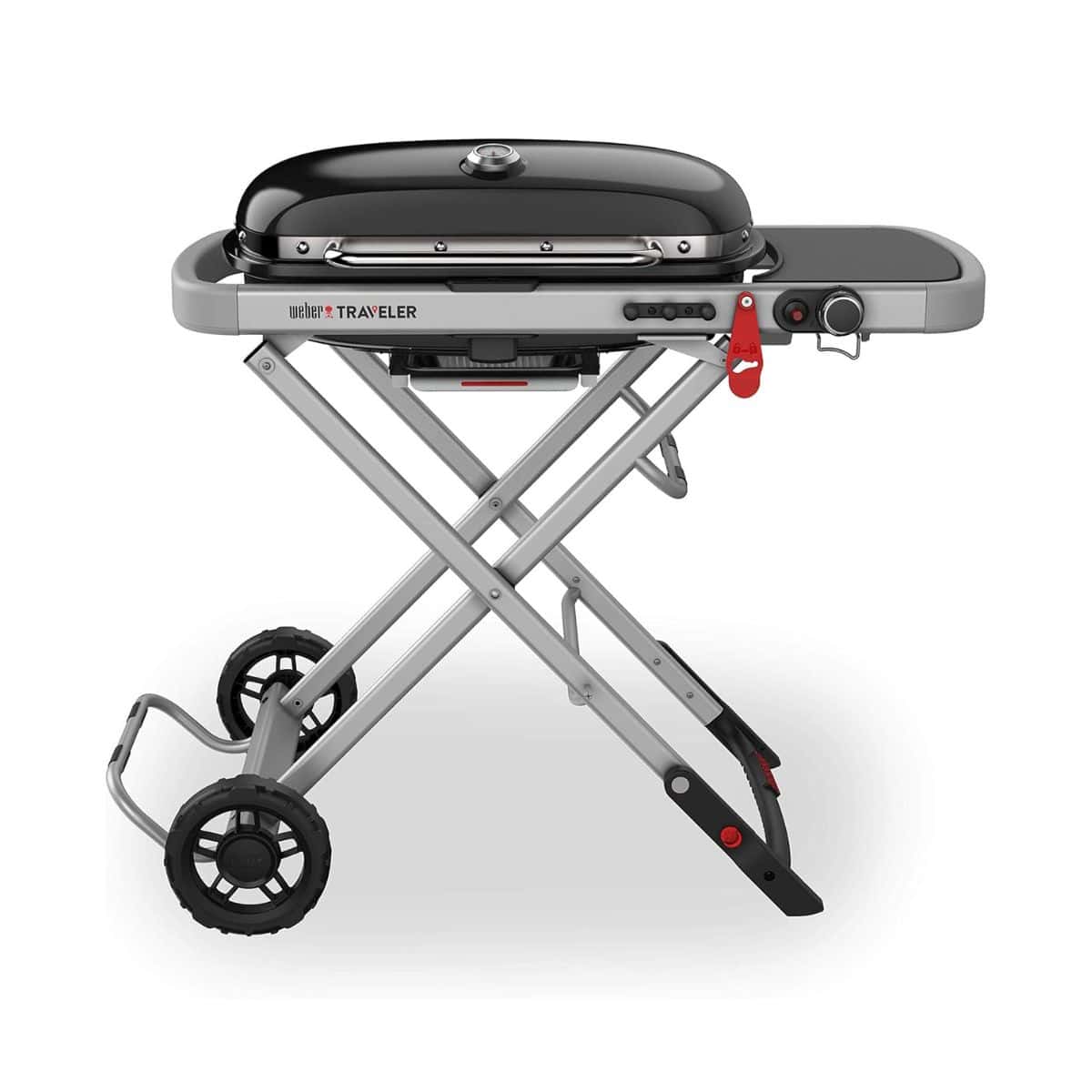
Grill has a powerful and efficient 13,000 BTU burner
Best Pellet Grills for RV Travel
These camping RV grills make the most sense for campers who stay longer, have dependable power, and want smoked food without babysitting a fire all day. They ask more from your setup, but they open the door to more cooking styles.
Green Mountain Grills Trek Prime Portable Pellet Grill
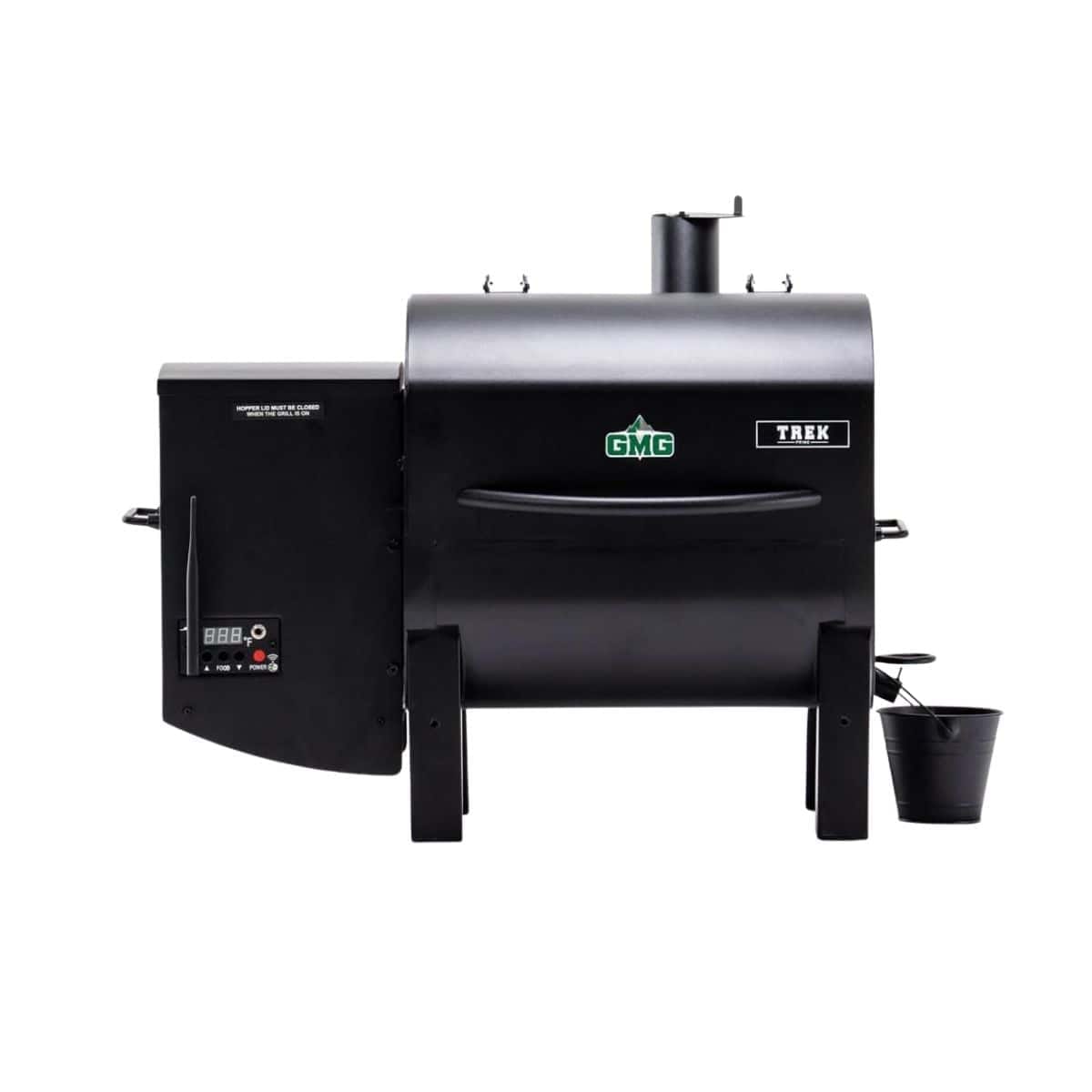
The GMG TREK PRIME 2.0 Pellet Grill has stouter legs and an exterior heat shield adjustment rod.
Traeger Ranger Portable Pellet Grill
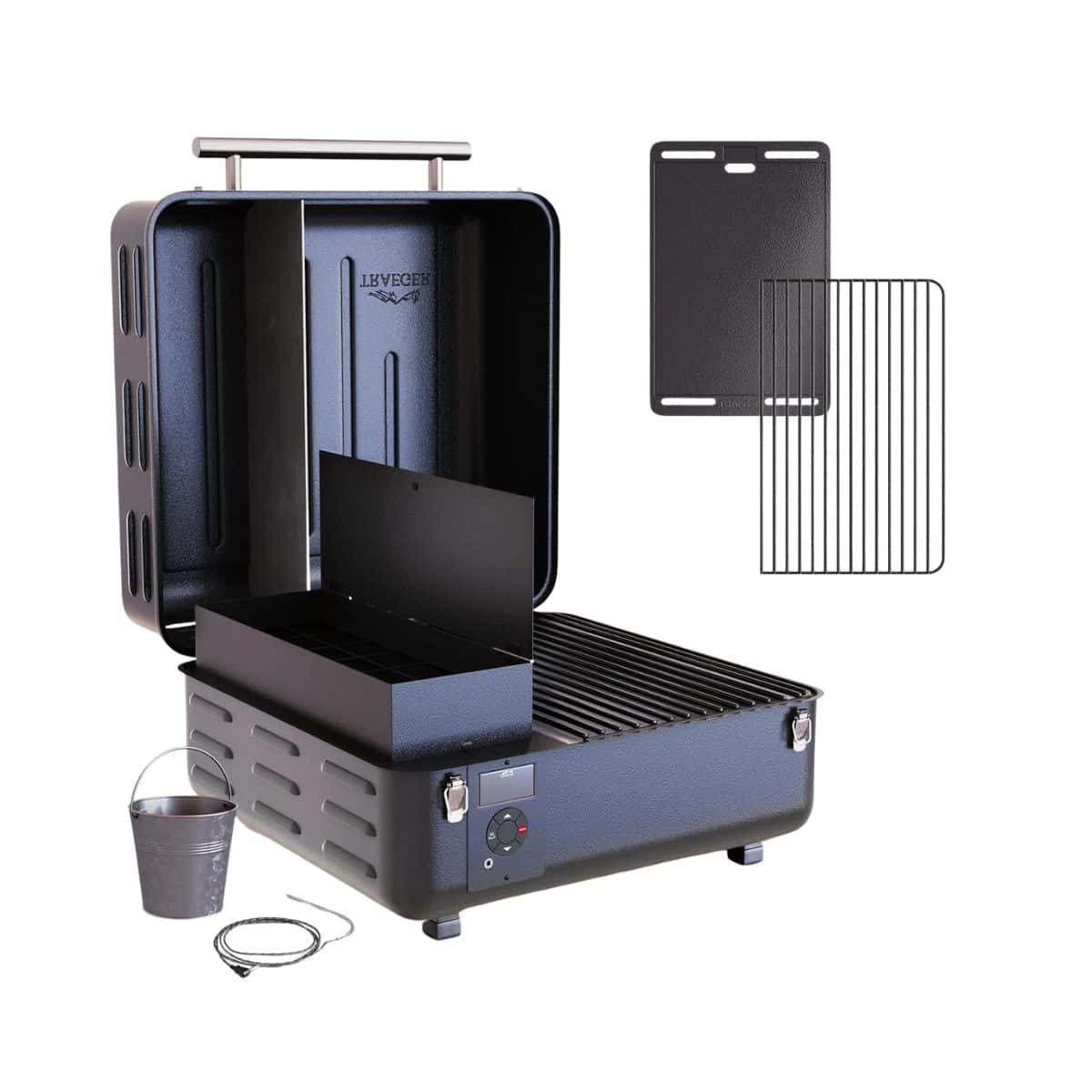
Features a Digital Arc Controller for accurate temperature control
Disclosure: As an Amazon Associate, we may earn from qualifying purchases.
Gear Comparison Guidance
Comparing portable camping grills usually comes down to how you camp, not which grill looks best in a photo. Gas grills win on speed, ease of temperature changes, and a simple shutdown. That makes them a strong match for travel days, overnight stops, and regular RV use.
Charcoal grills give you better smoke flavor, but they ask for more patience, more cleanup, and more attention to fire rules. Tailgate-style grills offer more workspace and capacity, though they cost you more storage room. Pellet grills bring steady digital control and a wider cooking range, but they add weight, electrical needs, and one more thing to plan around.
Think about the whole routine. A lighter grill is easier to carry, but it may be less stable in the wind. A larger grill may cook for the whole crew, but it can be a beast to stow. Fast setup sounds great until you notice weak legs or awkward cleanup. On the flip side, the most durable portable camping grill in the bunch is not always the one you will feel like unloading after a long drive. Pick the one that fits your pace, fuel access, storage space, and patience level.
Quick Decision Guide
- If you move campsites often, a compact gas grill usually makes the most sense. It lights fast, cools down cleanly, and is easier to use on short stays.
- If smoky flavor matters more than speed, a charcoal grill is worth the extra effort. Just leave room in your routine for a longer heat-up time and ash cleanup.
- If you often cook for family or neighboring campers, look at tailgate-style grills. The larger cooking surface can save you from having to run dinner in three separate rounds.
- If you stay in one place for several days and have reliable power, a pellet grill can be a good fit. It gives you greater flexibility for smoking and roasting without constant fire management.
- If your storage space is tight, avoid buying a portable camping grill that is more than you can realistically pack. A too-big grill tends to become garage furniture with travel scars.
Buying Considerations
- Storage size in the RV, truck, or trailer, before you fall in love with a bigger portable camping grill
- Grill stability on gravel pads, picnic sites, and uneven campground surfaces
- Fuel type and how easy that fuel is to carry, refill, or keep dry during the trip
- Set up and take down time after a long travel day.
- Cleaning demands, especially grease handling, ash disposal, and cooldown time before storage
- Local fire restrictions that may affect charcoal use or open-flame cooking
- Power access if you are considering a pellet grill
Accessory Ideas
- Grill cover: Helps protect the grill during travel and keeps road grime off cooking surfaces.
- Propane quick-connect hose: Useful for RVers who want to skip disposable cylinders and connect to the RV propane system.
- Long-handled grill tools: Give better control and keep hands farther from flare-ups.
- Digital meat thermometer: Makes thicker cuts easier to cook properly without guesswork.
- Chimney starter: A handy add-on for charcoal campers who want faster, more even coal startup.
- Sealed fuel storage bin: Helps protect charcoal or pellets from moisture and keeps loose gear cleaner.
Portable Camping Grills FAQs
What is the best type of portable camping grill for RV camping?
For many RV campers, portable gas grills are the easiest fit because they light quickly, adjust heat fast, and shut down cleanly. They work well for common camp meals and shorter stays. Charcoal and pellet grills can be great too, but they usually need more planning, cleanup, or power support.
Are charcoal grills a bad idea for campgrounds?
Not necessarily, but they are less convenient. Charcoal grills take longer to heat up, produce more ash, and may be restricted during dry conditions or fire bans. They are a better fit for campers who enjoy the cooking process and plan meals around grilling, rather than squeezing it in between other camp tasks.
Do pellet grills work well for camping?
They can work very well for camping, especially on longer stays where you have dependable electricity. Pellet grills offer steady temperature control and more cooking versatility, but they are heavier, more complex, and need both power and dry pellet storage to perform well on the road.

How much cooking space do I really need in a portable camping grill?
That depends on how many people you feed and whether you cook one item at a time or full meals outdoors. Solo campers and couples can often get by with compact tabletop grills. Families and group campers usually appreciate the extra room that tailgate-style grills provide.
What causes the biggest problems with portable grills at camp?
A lot of grill trouble starts before the first meal. Buying a portable camping grill that is too large, failing to plan fuel, ignoring wind and placement, or choosing a pellet grill without thinking through power are the common headaches. Most of those problems are easy to avoid with a little trip prep.
Other Resources
These articles can help readers build out a more useful outdoor cooking and camp setup around the portable camping grills covered in this chapter.
- Learn how to make perfect Campfire Mac and Cheese: A step-by-step guide
- Camp Comfort Gear Essentials – Camp Chairs That Don’t Wreck Your Back – Recommended Gear & Resources (Chapter 1)
- Camp Comfort Gear Essentials – Tables, Prep Surfaces, and Folding Furniture – Recommended Gear & Resources (Chapter 2)
- Camp Comfort Gear Essentials – Outdoor Living Spaces – Best Recommended Gear & Resources (Chapter 6)
Keep Exploring Camp Cooking Gear Essentials
If portable camping grills are a bigger part of your camp setup, these nearby gear topics are natural next stops. They cover the kinds of equipment that usually work alongside a grill once camp life settles in.
- Camp Comfort Gear Essentials – Shade, Tarps, and Portable Shelter – Recommended Gear & Resources (Chapter 5)
- Camp Comfort Gear Essentials – Storage and Organization Helpers – Recommended Gear & Resources (Chapter 7)
- Camp Comfort Gear Essentials – RV Small Comfort Extras – Recommended Gear & Resources (Chapter 8)
Closing Guidance
The right portable camping grill is the one that fits how you actually camp. That sounds obvious, but this is where people get sideways. A grill that looks impressive online can become a storage hog, a cleanup nuisance, or a power-planning headache once it meets the real world. On the other hand, a simple grill that lights quickly, cooks steadily, and packs away without drama is often the one that gets used on every trip.
Portable gas grills usually make the best case for everyday practicality. Charcoal rewards patience with better smoke flavor. Choose tailgate-style portable grills for when the guest list grows. Pellet grills can produce excellent results, but only when your setup supports their weight, power needs, and added complexity. None of those choices is wrong. They just belong to different kinds of camping.
It also helps to think beyond the portable camping grill itself. Fuel planning, wind exposure, stable placement, and cleanup habits all shape whether outdoor cooking feels easy or annoying. A well-chosen grill makes camp meals feel relaxed. A poorly matched one can turn supper into a wrestling match with weather, storage, and soot.
That is why this chapter matters. It is less about chasing a “best” grill and more about matching equipment to your pace, storage limits, and how you like to cook outside.
For the deeper breakdown, revisit the chapter. That is where the full reasoning lives. This page is the quick sorting table. The chapter is where you decide what truly deserves a spot in your camp kitchen.
Date Updated: 03/26